
Croatia has a vibrant free tour scene in four major cities - Zagreb, Split, Dubrovnik and Zadar - with dozens of walking tours led by locals. Registration for the tours is free, and at the end each participant tips the guide in an amount they feel is fair, depending on the experience. Most tours, in English, last between an hour and a half and two hours, and cover the ancient cities and historic quarters.
The model is simple: you register for free in advance through dedicated platforms, arrive at the meeting point in the Old City, and at the end of the tour you decide for yourself how much to give. This method creates real motivation - local guides who earn their living solely from tips invest in each group as if it were the only one.
The Croatian scene is centered around the historic cities: the capital Zagreb, Split with its Roman palace, walled Dubrovnik, and Zadar on the Dalmatian coast. Most of them have several operators operating simultaneously, so you can find a tour departing most days of the week and at different times of the day.
Recommended free tours in Croatia
Croatia's free tour scene stretches from the capital Zagreb to Dubrovnik on the Adriatic - walking tours with local guides on a tip-based satisfaction model.
MUST DO Split walking tour
A walking tour centered in the heart of Split, passing through Diocletian's Palace and the alleys of the old town with explanations about Roman history and today's local life.
"Tour by Dubrovnik Local" #PearlofAdriatic
A local guide who knows every stone in the old city - the stories behind the walls, the Stradun Street, and the corners that most tourists miss in the pearl of the Adriatic.
Join the #1 Free Tour in Split
One of the most popular tours in Split - a complete introduction to the old city, the Roman quarter and the Riva promenade, at a leisurely pace that is also suitable for families.
Free Spirit Zagreb: Free Tour with a Local Guide
A long-standing tour of the Croatian capital that connects the historic upper town with the lower town, with an emphasis on Zagreb's coffee culture and local atmosphere.
Ancient Old City- Finest tour of Dubrovnik #2026!
Dive into the history of ancient Dubrovnik - from the days of the Republic of Ragusa to the present day, on a tour that encompasses the most prominent monuments within the walls.
Free Spirit Dubrovnik: Free Tour with a Local Guide
A tour with a local guide who shows Dubrovnik beyond the postcards - history, daily life in the old city and the stories behind the famous sites.
A Journey Through Time - Step into History of Zagreb
A chronological journey through the history of Zagreb - from the medieval city through the Austro-Hungarian period to modern Croatia, layer by layer.
Free Spirit Zadar: Free Tour a Local Guide
Getting to know Zadar led by a local guide - the Roman Forum, ancient churches and the famous Sea Organ, in a port city with thousands of years of history.
Free tours by city
Free tours in Dubrovnik – the old town, the walls and Game of Thrones with a local guide
Free Tours in Hvar – Discover the Pearl of Croatia’s Islands on Foot
Free tours in Omis – following pirates through canyons, fortresses and the sea
Free tours in Porec – the Roman city of Istria with a local guide
Free walking tours of Pula – the Roman city of Istria with local guides
Free Tours in Rijeka – Walking Tour with a Local Guide in the Kvarner Port City
Free tours in Rovinj – discover the pearl of Istria on foot with a local guide
Free Tours in Sibenik – Walking Tour of the Old Town with a Local Historian
Free Tours in Split – Walking Tours of the City of Diocletian's Palace
Free tours of Trogir – the small medieval island accompanied by a local guide
Free tours in Zadar – with a local guide from the Roman Forum to the Sea Organ
Free Tours in Zagreb – Discover the Croatian Capital on Foot with a Local Guide
Why you should travel to Croatia with a local guide
Croatia is one of the most rewarding countries in Europe for walking tours: its historic cities are compact, mostly pedestrian-only areas, and almost every significant site is within a short walk of the heart of the old town.
Four cities, four worlds
Zagreb, the capital, surprises travelers who come mainly for the coast: the upper town with the colorful roof of St. Mark's Church, Austro-Hungarian-style boulevards and a café culture that doesn't shy away from Vienna. Split is built inside Diocletian's Palace - a more than 1,700-year-old Roman palace that has been transformed into a living, breathing city, and a guided tour is the best way to really understand how it happened.
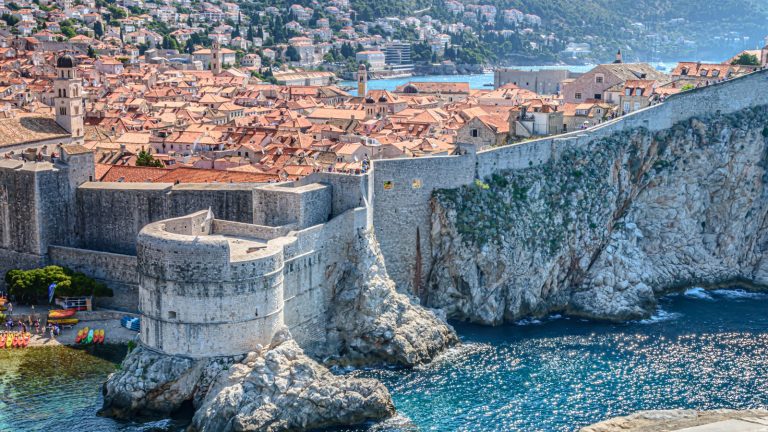
Old Dubrovnik, the "Pearl of the Adriatic," is entirely closed to cars - the walls, Stradun Street, and terraced alleys are only experienced on foot, and a local guide can also lead you to the quiet corners beyond the photographed route. And Zadar, the oldest of them, offers a Roman forum, ancient churches, and a sea organ that sings with the waves - all within a small old town that can be crossed on foot in minutes.
In each of these cities, the free tour is an excellent start to a visit: an hour and a half to two hours that organizes the map in your head, provides historical context, and leaves you with a list of local recommendations for the rest of your stay.
Important tips before you go out
Currency and tips
The currency in Croatia is the euro, which simplifies the matter of tipping at the end of the tour. It is customary to give the tip in cash directly to the guide, in an amount that reflects your satisfaction with the experience - it is worth stocking up on small bills in advance, because ATMs in the ancient cities are busy during the season and some charge high fees.
Languages
Most free tours in Croatia are in English, and some operators also offer Spanish. Tours in Hebrew are rare, but the English of the local guides is clear and accessible even to those with basic English.
Move between cities
The intercity bus network in Croatia is well-developed and relatively cheap, and in the summer it is joined by ferries along the Dalmatian coast. A popular combination: landing in Zagreb, descending south to Split and ending in Dubrovnik - each one has a free tour that opens the visit in the best way. Croatia is considered very safe for travelers; normal vigilance against pickpockets in crowded areas during the high season is enough.
When to go out
July and August are hot and busy, especially in Dubrovnik when cruise ships are docked - in the summer months it is better to choose an early morning or evening tour. Spring and autumn are the most comfortable seasons for walking, and tours operate at almost full capacity in all cities.
All free tours in Croatia on the GuruWalk website
Frequently Asked Questions
Are the free tours in Croatia really free?
Registration and participation are completely free, and there is no fixed price. At the end of the tour, it is customary to give the guide a cash tip in an amount that each participant determines for themselves, depending on their satisfaction with the experience. The guides earn their living solely from tips, so their level of investment is particularly high.
Which cities in Croatia have free tours?
The scene is centered around four major cities: the capital Zagreb, Split, Dubrovnik, and Zadar. Each has local guides operating in the old town, and usually has several operators and routes to choose from.
In what language are the free tours in Croatia?
Most tours are conducted in English, and some operators also offer Spanish. Tours in Hebrew are rare, but the guides' English is clear and accessible even to those with a basic command of the language.
How long does a free tour in Croatia last?
Most tours last between an hour and a half and two hours, depending on the city and the route. This is an ideal length for a first introduction to the Old City without tiring yourself out, and leaves the rest of the day free.
When is the best time to go on a free tour in Croatia?
Spring and fall are the most comfortable seasons for walking. In the summer months, especially in Dubrovnik, it's best to choose an early morning or evening tour - both because of the heat and to avoid the crowds when cruise ships dock in the city.
How is it customary to give a tip at the end of the tour?
The tip is given in cash directly to the guide at the end of the tour. The currency in Croatia is the euro, so it is worth stocking up on small bills in advance - ATMs in the ancient cities are busy during the season and some charge high fees.








