
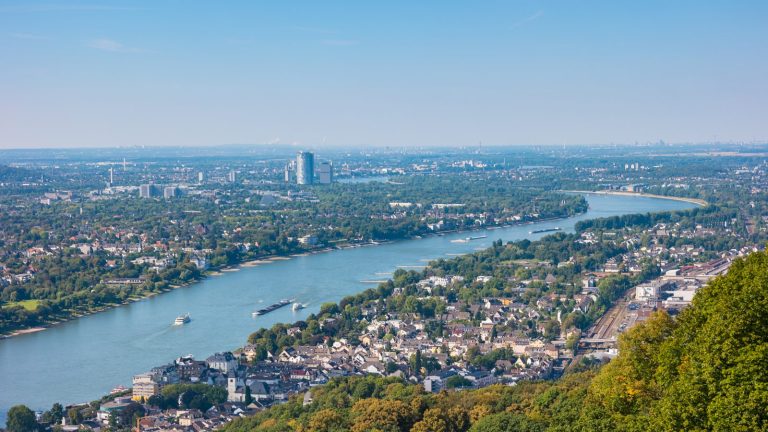
Yes, Bonn offers free tours in a free tour format: one central walking tour that consistently goes out via the GuruWalk platform and covers the old city, the Roman roots of the place, the Beethoven House, and daily life in the former West German capital. Participation is free of charge in advance, and at the end, each participant gives the tour leader a tip according to their satisfaction and convenience.
This model works particularly well in a city the size of Bonn. It is small enough that a single walk connects the ancient Roman quarter, the Baroque square and the university boulevards, and large enough that there is something to tell about every corner. There are no endless lines here and there is no feeling of a city built around tourists, which makes the groups more intimate than in Germany's larger cities.
Those who come to Bonn for one day on their way to Cologne or the Rhine Valley will find the free tour the quickest way to understand what they are seeing. Those who stay for two days will find that the tour opens doors for independent continuation: the former government district, the museum avenue and the promenade along the river.
Recommended free tours in Bonn
The free tours in Bonn focus on the old town: Roman roots, Beethoven House, the market square and the Rhine viewpoint, with a local guide and a tip at your discretion.
Classic Bonn Free Tour: Roman Roots, Beethoven & Local Life in the Ex-Capital's Old Town
A walk through the historic center of Bonn, from the city's Roman roots to the Beethoven House, the market square, and the buildings that tell its story as the former capital of West Germany. Alongside the familiar sites, the everyday corners where locals live are also included.
The live tour schedule is displayed in English and updated directly from the GuruWalk system - clicking on a tour leads to the booking page.
Why take a walking tour of Bonn?
Bonn is incredibly compact. Almost everything of interest is concentrated in a single ring of pedestrian streets between the river and the main train station, so you can leave the market square, pass the pink Baroque town hall, reach the Romanesque abbey church and stop in front of the Beethoven statue in the Münster square, all in one leisurely walk and without public transport.
What makes walking with a local guide particularly worthwhile is the hidden layer. The city was founded as a Roman legionary camp some two thousand years ago, served for centuries as the seat of the Electors of Cologne, and in the second half of the 20th century became the capital of West Germany until reunification. These layers hardly shout from the facades, and without someone pointing them out, they are easy to miss entirely.
The stations that return almost every time you walk
- The Kornfirst Palace, which today houses the main building of the University of Bonn, and the extensive garden in front of it
- Bongsa Street and the house where Ludwig van Beethoven was born
- The Star Gate, a remnant of medieval fortifications stuck inside a commercial street
- Alter Zöl, an observation deck above the Rhine with a view of the Siebenbürger hills across the river
The walk also explains something about the present: Bonn today is a student city and a city of international organizations, not just a historical setting. This mix is hard to grasp from reading in advance, and it's very easy to feel when someone who lives here talks about it as you walk down the street.
Areas and starting points of the tours
The starting points for walking tours in Bonn are almost always concentrated in the heart of the old town, around the Market Square and the Münster Square. This is the most densely populated area historically, and from there you can head out in all directions on foot.
The Old City and the Market Square
Paved, closed to traffic and filled with vegetable and flower stalls in the morning. The historic city hall, commercial alleys and Beethoven House are concentrated around it, and it serves as the central axis for most walks.
The University Quarter and the Garden
South of the Old City lies the palace complex with the garden in front of it, a huge grassy expanse where students sit every sunny day. From there, an impressive avenue continues towards the Poppelsdorf Palace and the Botanical Garden.
Walter Zull Promenade
Eastern end, above the Rhine. The natural end point of a walk in the city, with views of the river, the tourist ships and the hills beyond. The promenade continues north and south along the water.
Government District and Museum Avenue
South of the center, a short drive away, is the area where West German politics took place and where international institutions and a series of large museums now reside. This area is less included in the classic walk, and is suitable as an independent continuation after the tour.
Important tips before you go out
Registration is done in advance through GuruWalk, even when there is no fee. The number of places in the group is limited, and during busy seasons a popular tour may fill up several days in advance. If plans change, canceling early frees up a spot for someone else and is considered basic good manners.
Languages, times and weather
Most free tours in the area are conducted in English, and sometimes also in Spanish or German. The exact language appears on the booking page for each tour, so it is worth verifying it before booking a place. Tours in Hebrew are not common in Bonn. The late morning hours are especially pleasant: the old town is already awake, the light is good for photography, and you can continue from there directly for lunch. Arrive a few minutes before the specified time, because the group leaves on time. Comfortable, closed shoes are a must - the square and the alleys around it are paved with interlocking stone - and it is worth taking into account sudden rain, a routine phenomenon in the Rhine Valley in any season.
Gratuities and payments
At the end, it is customary to tip the tour guide in cash and euros, in an amount that reflects the quality of the walk and what you are comfortable with. There is no rate and no stated requirement, but this is the only source of income for the person who led you, and it is worth taking this seriously. Save some small bills in advance, because not every corner has an ATM available, and some cafes in Germany still prefer cash to cards.
For city transportation, the tram and bus network covers the center and the suburbs well, and light rail lines connect Bonn to Cologne in a relatively short trip. Note that most shops in Germany are closed on Sundays, so this is actually an excellent day for walking around the city and visiting museums.
Paid tours and attractions in Bonn
The tours on the site are free based on a tip; those who want to delve deeper can also combine a guided tour or a paid attraction - these are the leading options in the city:
Bean to Bar Chocolate - Quick Tasting
A short chocolate tasting that accompanies the journey from the cocoa bean to the finished package. A sweet and concentrated stop that easily fits between two stops on a walk through the city.
Frequently Asked Questions
Are the free tours in Bonn really free?
There is no upfront payment and no booking fee, so participation itself is completely free. The model is based on a tip given at the end of the walk to the person who led it, in an amount that each participant determines for themselves. Those who do not enjoy themselves are not obligated to speak, but in practice most participants choose to appreciate the work.
Do I need to book in advance?
Yes, registration is done in advance through the GuruWalk platform, even when there is no fee. Groups are limited in size, and during the summer months and long weekends, spots fill up quickly. If you have changed your plans, canceling in advance frees up your spot for someone else.
In what languages are the tours conducted?
Most free tours in Germany are conducted in English, and sometimes also in German or Spanish. The language is clearly stated on the booking page for each tour, so it is worth checking before booking. Tours in Hebrew are not available in Bonn.
How much is it customary to tip?
There is no fixed amount and no official rate. The accepted rule is to give cash in euros in an amount that reflects the length of the tour, the quality of the explanation, and your personal feeling. Bring some small bills in advance, because at the end of the walk there is not always an ATM nearby.
Is the tour suitable for children?
The walk in the center of Bonn is relatively short and flat, so school-age children usually do well with it. With toddlers, it is worth remembering that this is a continuous walk with explanatory stops, and sometimes it is better to be content with part of it. A stroller can pass most of the route, but the paving stones in the old area are not smooth.
When is the best time to go on a city tour?
Late morning is the most convenient choice: the Old City is already active, the stalls in the square are open, and the light is excellent. In the winter months, it is best to tour as early as possible due to the short daylight hours, and in any season it is recommended to take a rainproof layer.



