
There is one regular free tour in the tour format, a walking tour accompanied by a local guide who explains the Old City, its architecture, and daily life. There is no charge to register in advance on the platform, and the only cost is a tip given to the guide at the end of the tour based on satisfaction, with no set price in advance and no obligation.
Tours sits between the Loire and the Cher rivers, in the heart of the Tourne region, and is the natural starting point for those arriving in the Loire Valley. The city is modest in size but packed with layers: a single ancient street can connect a 15th-century half-timbered house, the remains of a medieval basilica and a bustling student café.
The free tour model is perfect for a city like this. Instead of running around between disconnected sites, you get a continuous story that explains why one of the most important cities in medieval France was founded here, and how it functions today as a living student city rather than a museum site.
Recommended free tours in Tours
One free tour operates in Tours and offers an in-depth introduction to the old town, local architecture, and history of the capital of Tours.
Tours Decoded: Local Life, Architecture & History
A walking tour that reveals Tours from the inside: the architecture of the old town, the historical layers beneath the streets, and the way daily life is seen here. A good first introduction to the city before heading out to the Loire Valley.
The live tour schedule is displayed in English and updated directly from the GuruWalk system - clicking on a tour leads to the booking page.
Why go on a walking tour of Tours?
Tours is built on a human scale. The distance between the old town and the cathedral, and from there to the banks of the Loire, is all covered comfortably on foot, so a local guide can piece together a complete story in an hour or two instead of jumping between distant stations.
A city built of wood
The historic heart, known as Vieux Tours, has preserved a rare cluster of half-timbered houses from the 15th and 16th centuries. Place Plumereau, which locals call Plume for short, is surrounded by almost completely preserved timber-framed facades and still functions today as the city's drawing room. The streets around it, including the alleys that lead to the covered market, are where a difference in floor or type of beam tells of class and period.
The Cathedral and the Roman Layer
Built over centuries, the Cathédrale Saint-Gatien's façade shows a clear transition between Gothic and Renaissance styles. Around it, in the older quarter, the outlines of the Roman city and its surrounding walls are still visible.
Saint Martin and Pilgrimage
Tours was a major pilgrimage destination thanks to Saint Martin, one of the most influential figures in Western Christianity. The Charlemagne Tower and the Clock Tower are the most prominent remains of the huge basilica that once stood here, and a good guide explains how the city grew around a single holy site.
Areas and starting points of the tours
City tours usually move between several areas that together make up the historic axis of Tours, all of which are within walking distance of each other.
Via Tour and Plimroe Square
The Western Quarter, the heart of the old city. Wooden houses, narrow alleys, cafes and bars that fill the square in the afternoon and evening. This is usually the starting or ending area of a walking tour.
Cathedral Quarter
The eastern and quieter part, around Saint-Gétian. Here are also the former Archbishop's Palace, which houses the Museum of Fine Arts, and the remains of the Tour Castle on the riverbank.
The central axis and National Street
The main artery that crosses the city from north to south, from Wilson Bridge to the train station. Around it are the city hall, Jean Jaurès Square, and the city's commerce, and it is also the part that was rebuilt after the destruction of the wars of the 20th century.
The banks of the Loire
The promenade and the islands in the river offer a broad perspective on the city, and explain why it was here, across the river, that a settlement was established in the first place.
Important tips before you go out
A few things worth arranging before going on a tour, and a few things worth knowing about the city itself.
- Reserve a place in advance. Signing up through GuruWalk is quick and free, but in a small city, the number of places on a tour is limited, and during peak season they get booked up. Booking in advance also lets the guide know how many people to expect.
- The language of the tour. Most free tours in Europe are held in English or Spanish, and in France, French is often also included. The language is indicated on the tour page itself, and it is worth checking it before booking and not assuming.
- Arrive early. A few minutes before the scheduled time, with the reservation name available. Tours depart on time and being late usually means missing out.
- Shoes and weather. The cobblestones in the Old City are unforgiving, and in the winter months the area is damp and cool. A small umbrella or a thin coat in your bag will save you a lot.
- The tip. This is what replaces the price of the tour, and it is given at the end according to your feeling and what you received. Cash in euros is preferable, because not every guide has a Mesopotamian. If the tour was long, precise and left you with a real understanding of the city, it is time to reflect on it.
- Traffic in the city. The tram and bus lines cover the main thoroughfares, but virtually the entire historic core is a short walk away. From the train station to the old town, it is easily reached on foot.
- opening hours. In France, many small businesses close at lunchtime and on Sundays, so it's worth planning your meals accordingly. Admission to the cathedral itself is free.
- A day out of town. Tours is an excellent base for the Loire Valley castles, and it's worth combining a city tour on foot on one day and a trip to the castles on another day, rather than cramming the two together.
Paid tours and attractions in Tours and the Loire Valley
The tours on the site are free based on a tip; those who want to delve deeper can also combine a guided tour or a paid attraction - these are the leading options in the city:
Château de Chenonceau: Entry Ticket
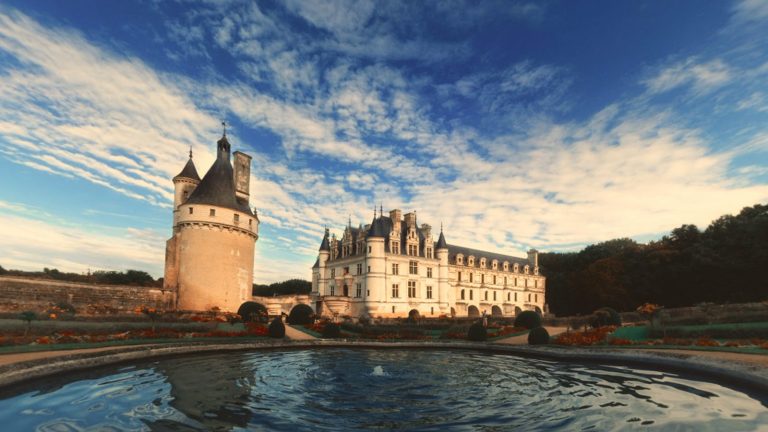
Entrance ticket to Chenonceau, the castle that stretches over the Cher River in a vaulted gallery and is considered one of the most beautiful in France. It is surrounded by historic gardens that have been preserved over the centuries.
Hot-Air Balloon Ride over the Loire Valley, Amboise or Chenonceau
A hot air balloon flight over the Loire Valley in the Amboise or Chenonceau area, with a bird's-eye view of the river, the forests, and the castles scattered between them.
Frequently Asked Questions
Are the free tours in Tours really free?
Registration and participation do not require any advance payment, and there is no fixed price for the tour. At the end, it is customary to tip the guide based on satisfaction, and that is essentially his entire salary. Anyone who was not satisfied with the tour is not obligated, but in practice this is how this model works.
Do I need to book in advance?
Yes, and this is especially important in a city the size of Tor. Booking is done through GuruWalk free of charge, and the number of participants on each tour is limited. Without advance registration, there is no guarantee that there will be a place, and during busy seasons the tours fill up.
In what languages are the tours held?
Most free tours in the area are conducted in English, and sometimes in Spanish or French. There is no guarantee that the tour will be in Hebrew. The language is clearly stated on the tour page, and it is a good idea to check it before booking and not rely on a discount.
How much is it customary to tip at the end?
There is no set fee and no one specifies the amount. The simple rule is to reflect what you received: the length of the tour, the quality of the explanation, and how much it changed your understanding of the city. Cash in euros is preferable, because not every guide has a digital payment method.
Is the tour suitable for children?
The route in the Old City is relatively short and is entirely on foot, so it is possible with older children who are able to listen to a continuous explanation. It is less suitable with toddlers, and the paving stones make it difficult for a stroller. It is worth writing to the guide in advance through the platform and asking.
How much time should you dedicate to a column?
Two days give a good picture: one day for the city itself, which begins with a walking tour and continues at the cathedral, the market and the riverbanks, and another day for a trip to the castles of the Loire Valley. Those who come for only one day will prefer to stay in the historic core.


